The Sacred Green

抹茶 MATCHA

A thousand years of ceremony, culture, and craft — powdered into a single bowl.

Discover the Story

Born in the mountains of Tang Dynasty China

Matcha's story begins over 1,200 years ago in China, where Buddhist monks ground dried tea leaves into powder to sustain meditation. In 1191 CE, Zen monk Eisai carried tea seeds and the practice of powdered tea from China to Japan, planting the first seeds in Kyoto's Uji region.

Uji — cradled between misty mountains and the Uji River — became the world's most revered matcha terroir. The damp climate, nutrient-rich soil, and traditional shade-growing methods give Uji matcha its signature deep umami and vivid jade colour.

1191Year Eisai brought matcha to Japan
600+Years of Japanese tea ceremony
30gL-theanine per 2g serving
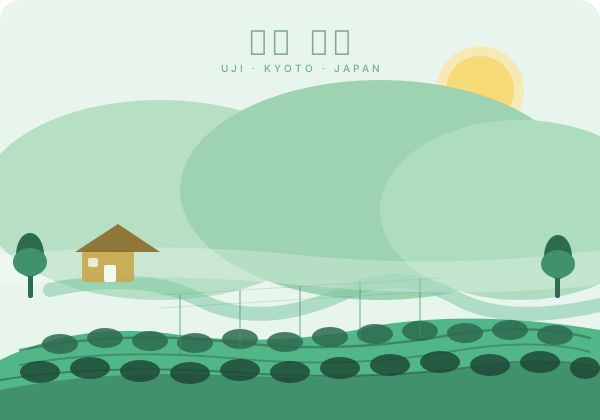
Terraced matcha tea fields in Uji, Kyoto
Uji, Kyoto — Japan's Matcha Heartland

A Thousand Years of Green

Drag or scroll sideways to travel through time.

618 – 907 CE

Tang Dynasty China

Buddhist monks grind dried tea leaves into powder to sustain meditation. The first whispers of matcha.

1191 CE

Eisai Brings Tea to Japan

Zen master Eisai sails from China with tea seeds and writes Kissa Yōjōki. The seed that changed Japan.

1300s

Uji Becomes the Epicentre

Shogun Yoshimitsu designates Uji. Shade cultivation (tana) is refined, creating the world's finest terroir.

1500s

Sen no Rikyū & Wabi-Cha

Rikyū codifies chado. Wabi — imperfect beauty — transforms tea into a spiritual philosophy.

1700s

Gyokuro & Shade Cultivation

Farmers perfect the 20-day shading technique, blocking 90% of sunlight. Maximum chlorophyll, maximum flavour.

1900s

Industrial Stone Mills

Granite stone mills are industrialised. Matcha becomes more accessible and Japan begins its first exports West.

2000s – Now

Global Matcha Renaissance

Matcha lattes, croissants, skincare. The global matcha market surpasses $5.5 billion. Green goes everywhere.

The Way of Tea

Chado — the Way of Tea — is one of Japan's most revered cultural arts. Rooted in Zen philosophy, it transforms the act of making matcha into a meditation on harmony, reverence, and impermanence.

The Four Principles

Wa — Harmony

Oneness with guests, season, and every object. Nothing forced; everything flows.

Kei — Respect

Sincere reverence for host, guests, and tools. Every gesture performed with full attention.

Sei — Purity

Cleanliness of body, space, and mind. Ritual purification is both physical and spiritual.

Jaku — Tranquility

The stillness that arises when the other three are embodied — the soul of the ceremony.

Essential Utensils

Chawan

The tea bowl — held in both hands, turned three times before drinking. Each chawan is unique; its imperfections are its beauty.

  • Held with both hands
  • Turned before sipping
  • No two are identical

Chasen

The bamboo whisk — hand-carved from a single piece of bamboo into up to 120 tines. A master craftsman trains 8 years to perfect one.

  • Single piece of bamboo
  • Up to 120 fine tines
  • W-motion whisking
2 scoops = 2g

Chashaku

The bamboo tea scoop — two level scoops measure a perfect 2g. Often inscribed by its maker with a poetic name.

  • 2 scoops = ~2g matcha
  • Carved from single bamboo
  • Named by the maker

Natsume

The lacquered matcha caddy — named after the jujube fruit it resembles. Stores sifted matcha during ceremony, lacquered in black, red, or gold.

  • Black, red, or gold lacquer
  • Stores sifted matcha
  • Named after jujube fruit

Kama

The iron kettle — the simmering sound is called matsukaze, "wind in the pines." Considered music for the ceremony.

  • Water at 75–80°C, never boiling
  • Sound called matsukaze
  • Cast iron, heavy & ancient

Fukusa

The silk cloth used to ritually purify the caddy and scoop. Its precise folding choreography differs between every tea school.

  • Crimson for guests, purple for host
  • Folding is a ceremony itself
  • Purifies tools before each guest

Two Styles of Preparation

Thin Tea

Usucha

RATIO 2g matcha 70ml water TEMP 75°C TEXTURE light · frothy · airy □ □ □ individual bowls
  • Ratio: 2g matcha · 70ml water
  • Texture: Light, frothy foam
  • Flavour: Bright, slightly bitter, grassy
  • Context: Informal & formal ceremonies
Thick Tea

Koicha

RATIO 4g matcha 40ml water TEMP 80°C TEXTURE thick · syrup-like · slow ■ shared bowl · communal trust
  • Ratio: 4g matcha · 40ml water
  • Texture: Thick, syrup-like
  • Flavour: Intense umami, sweet, no bitterness
  • Context: Formal ceremonies & special occasions

Ceremony Through the Seasons

Spring

Cherry blossom and fresh harvest. Lighter, floral matcha. The first-harvest ichibancha is served with wagashi shaped like sakura.

Summer

Ro (hearth) replaced by furo (portable brazier). Open-air ceremonies. Thin glazed or wide chawan to let the tea cool. Cool, spare aesthetics.

Autumn

Moon-viewing ceremonies (tsukimi). Deep warm tones in the tearoom — russet, amber, and burgundy. Richer matcha to match the cooling air.

Winter

The ro (sunken hearth) returns. Tearoom is enclosed and intimate. Koicha is most ceremonially significant here — warmth shared between guests.

There's More to Discover