Science & Grades
Benefits
When you drink matcha you consume the whole leaf rather than a steep, so a serving delivers more catechins, L-theanine and caffeine than the same weight of steeped green tea. Below we separate what the evidence actually supports from what marketing tends to claim. If you have not bought matcha before, read best matcha to buy first time first. It covers the price floor and the mistakes that matter more than brand choice. For caffeine specifically, our matcha caffeine content page gives the measured range per gram rather than per cup, and hojicha vs matcha covers the low-caffeine alternative. If you are judging a tin you have just opened, what the colour of the powder tells you is the fastest signal available. Three companion pages go deeper than the sections below: what matcha actually is, what the ceremonial and culinary grade words mean, and matcha vs coffee alongside matcha vs green tea.
Most matcha research is small, short-term, or uses concentrated green tea extract rather than whole matcha. We label each claim by how strong the evidence is.
L-theanine and caffeine taken together have been shown to improve attention and reduce the subjective sense of over-stimulation compared with caffeine alone. Effects are modest and vary between individuals. Matcha still contains real caffeine, so it can cause jitters or disturbed sleep in sensitive people or at higher doses.
The popular claim that L-theanine "time-releases" caffeine over 4–6 hours is not supported by pharmacokinetic evidence, caffeine from matcha is absorbed on a normal curve. What is better supported is that the L-theanine present alongside caffeine changes how the stimulation feels, not how fast it is absorbed.
Matcha is a genuinely concentrated source of EGCG, one of the most-studied plant catechins. Per gram, published measurements put matcha at roughly 1–3× the EGCG of good loose-leaf green tea, not the 137× figure repeated across the internet, which came from comparing one matcha sample against one specific bagged tea under different extraction conditions.
The widely quoted "35–43%" figure is a misreading of a 1999 trial that used green tea extract capsules, not matcha. That study found a roughly 4% increase in 24-hour energy expenditure; the 35–43% was an extrapolation of the change within the small thermogenesis compartment. Meta-analyses find any weight effect from green tea catechins is small and not clinically meaningful on its own.
Matcha contributes catechins, chlorophyll, small amounts of vitamins and minerals, and dietary fibre from the whole leaf. Laboratory studies show antibacterial and antiviral activity for green tea catechins, but this has not been shown to translate into fewer infections in people drinking tea.
Large observational studies in Japan and China associate habitual green tea drinking with modestly lower LDL cholesterol and lower cardiovascular mortality. These are associations, not proof of cause, and are drawn from green tea broadly rather than matcha specifically.
We include this card to correct it. Chlorophyll gives matcha its colour, but there is no good human evidence that drinking matcha removes heavy metals or "toxins" from the body, your liver and kidneys do that work. Treat any product marketed as a matcha detox with scepticism.
Short trials of L-theanine report small reductions in self-reported stress and anxiety. The mechanism is not settled, and claims that matcha "increases serotonin, dopamine and GABA" in humans go beyond what the evidence shows. Because matcha contains caffeine, it may worsen rather than improve sleep if drunk late in the day.
How we handle health information
This page is general information, not medical advice. We label claims by evidence strength and correct figures that circulate widely but do not hold up. Matcha contains caffeine, if you are pregnant, taking medication, managing a heart or liver condition, or sensitive to stimulants, speak to a clinician about your intake. Whole-leaf teas can also carry trace heavy metals, so very high daily consumption is not automatically better.
Types
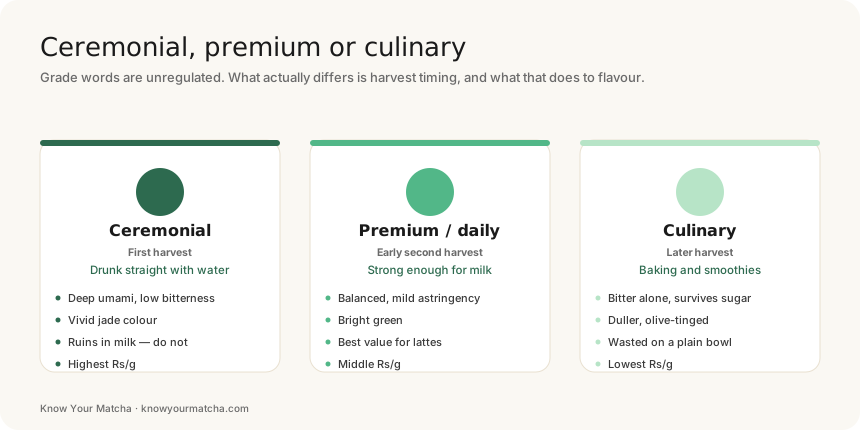
Not all matcha is equal. Quality is determined by harvest order, shading duration, growing region, and stone-milling precision.
The pinnacle. First harvest (ichibancha), youngest leaves, heavily shaded. Vibrant emerald colour, no bitterness, rich umami. Whisked with water only, no milk, no sugar.
Second harvest leaves. Slightly more bitter and stronger, ideal for matcha lattes and blended drinks. Still high chlorophyll, but more affordable.
Older leaves, later harvests. More astringent and earthy. The colour is lighter and more yellow-green. Perfect when combined with strong ingredients.
Terroir-specific matcha from Japan's distinct growing regions, each with a unique flavour profile shaped by soil, climate, and tradition.
Pass 1–2g of matcha through a fine sieve into a warm bowl (chawan).
Pour 60–80ml of water at 70–80°C (never boiling, it burns the leaves).
Using a chasen (bamboo whisk), whisk in a brisk W or M motion until frothy.
Drink immediately, turning the bowl clockwise twice before the first sip.
Comparison
Both come from Camellia sinensis, the same plant. Shade-growing, stone-milling and consuming the whole leaf do make a real difference. Here is what the evidence supports, and where the popular figures overstate it.
Both are good choices, but they are not interchangeable. Matcha is a concentrated whole-food; green tea is an infusion. If you already drink green tea daily and want to step up, start with a ceremonial-grade matcha →
Beginners Guide
New to matcha? Six things that will make every cup better from day one, starting with the one mistake that makes most beginners give up too early.
Skip culinary grade for your first cup. Ceremonial grade has been shaded for 20+ days before harvest, concentrating the sweetness, umami, and that vivid jade colour. It's the difference between tasting matcha and tasting bad matcha and giving up.
A straight bowl of ceremonial matcha (usucha) can be intense for a newcomer, vegetal, slightly bitter, full-bodied. A matcha latte eases you in: the milk softens the bitterness while still letting the green flavour come through.
Milk choice changes the drink completely. Oat milk's natural sweetness and creamy body complements matcha's vegetal notes without overpowering them, it's the barista favourite for a reason. Almond milk adds a light nuttiness. Full-fat dairy is classic and rich.
Hot matcha brings out deeper umami and a rounder sweetness, ideal for ceremonial bowls and morning rituals. Iced matcha is brighter, sharper, more refreshing: the form that's exploding globally. The trick: always whisk the matcha with a small amount of hot water first, then pour over ice.
Before buying anything, taste a proper ceremonial matcha at a café that takes it seriously. You'll immediately understand what you're chasing at home: the vivid colour, the crema, the aroma. It also calibrates your palate so you can judge quality when buying online.
Colour is the fastest quality signal. Good ceremonial matcha is deeply pigmented: a rich, slightly blue-tinged jade green. As quality drops, the green becomes lighter, then yellowy-green, eventually olive or khaki. This is the chlorophyll content dropping.
FAQ
Because you drink the whole leaf, matcha delivers more catechins (including EGCG), L-theanine and caffeine per serving than steeped green tea, published measurements put the per-gram EGCG difference at roughly 1-3x, not the 137x often quoted online. Evidence for L-theanine and caffeine together improving attention is promising but limited. Observational studies link habitual green tea drinking to modestly lower LDL cholesterol, but this is association rather than proof. Claims about detoxification and fat burning are not established.
Ceremonial grade uses first-harvest shade-grown leaves, stone-ground to silk. It has deep umami, vivid jade colour and minimal bitterness, drunk straight with water. Culinary/daily grade uses later harvests, is slightly more bitter, and is ideal for lattes, baking and smoothies.
Published analyses put matcha at roughly 19 to 44mg of caffeine per gram, so a 2g bowl lands somewhere around 38 to 88mg and the honest answer depends on your powder. On those figures the 400mg daily ceiling used by the FDA and EFSA works out to roughly four to ten bowls. See our matcha caffeine content page for the per-gram breakdown. That is arithmetic, not a recommendation from us: if you are pregnant, taking medication, or sensitive to stimulants, ask a clinician what is right for you. Matcha on an empty stomach causes nausea in some people, and matcha late in the day disturbs sleep in some people.
A 2g serving of matcha lands around 38 to 88mg of caffeine, against roughly 95mg for a 240ml cup of drip coffee and about 63mg for a single espresso. So a standard bowl is usually under a cup of coffee, comparable to an espresso, and well above a cup of steeped green tea, but the scoop decides it. Matcha also contains L-theanine, which trials suggest changes how the stimulation feels when taken alongside caffeine. It does not slow caffeine absorption, and matcha can still cause jitters or disturbed sleep in sensitive people.
Matcha and green tea both come from Camellia sinensis, but they are grown and processed differently. Green tea leaves are steeped in water and discarded. Matcha leaves are shade-grown for 20-30 days before harvest, which raises chlorophyll and L-theanine, then stone-ground into a powder you consume whole. Because you drink the leaf rather than an infusion, a matcha serving delivers more catechins and L-theanine than a cup of steeped green tea. Exact ratios vary widely by grade, freshness and how the green tea was brewed.
Matcha is more concentrated per serving because you consume the whole leaf rather than an infusion, so it delivers more catechins, L-theanine and chlorophyll than a comparable cup of steeped green tea. The commonly repeated 137x EGCG figure is unreliable, it came from comparing a single matcha sample against a single bagged tea under different extraction conditions, and better data suggests roughly 1-3x per gram. Green tea remains cheaper and more available in India, and the health difference between the two is smaller than marketing implies.