Terroir
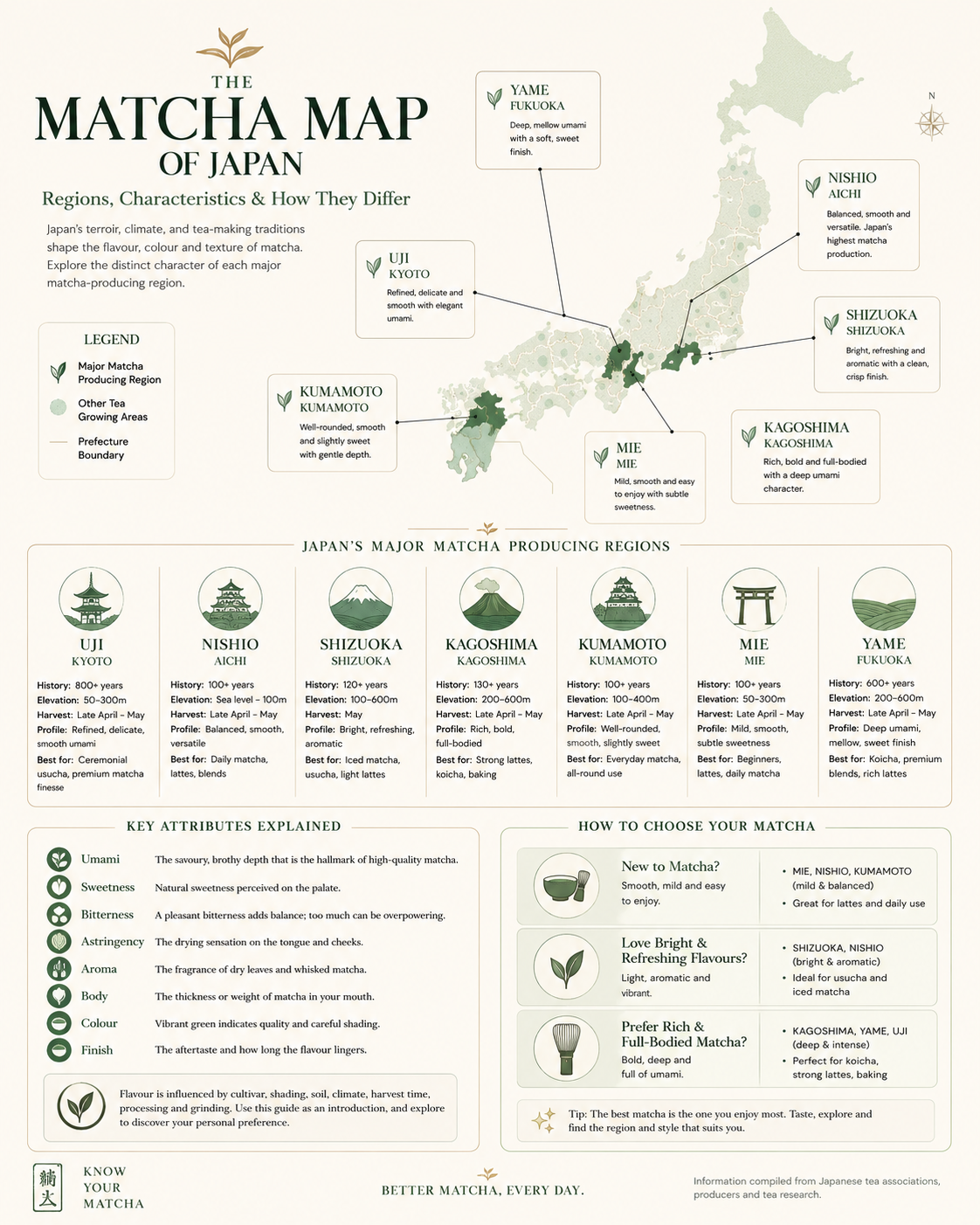
Matcha is a terroir product. The same cultivar grown in Uji and in Kagoshima produces two different teas, and once you can taste the difference, region tells you more about what is in the tin than the word “ceremonial” ever will.
Figures below are as published in the guide above. Elevation and history are the brand-facing figures the Japanese tea trade generally quotes; treat them as orientation rather than precision.
| Region | History | Elevation | Harvest | Profile | Best for |
|---|---|---|---|---|---|
| Uji Kyoto | 800+ yrs | 50–300 m | Late Apr – May | Refined, delicate, smooth umami | Ceremonial usucha, premium matcha |
| Nishio Aichi | 100+ yrs | Sea level – 100 m | Late Apr – May | Balanced, smooth, versatile | Daily matcha, lattes, blends |
| Shizuoka Shizuoka | 120+ yrs | 100–600 m | May | Bright, refreshing, aromatic | Iced matcha, usucha, light lattes |
| Kagoshima Kagoshima | 130+ yrs | 200–600 m | Late Apr – May | Rich, bold, full-bodied | Strong lattes, koicha, baking |
| Kumamoto Kumamoto | 100+ yrs | 100–400 m | Late Apr – May | Well-rounded, smooth, slightly sweet | Everyday matcha, all-round use |
| Mie Mie | 100+ yrs | 50–300 m | Late Apr – May | Mild, smooth, subtle sweetness | Beginners, lattes, daily matcha |
| Yame Fukuoka | 600+ yrs | 200–600 m | Late Apr – May | Deep umami, mellow, sweet finish | Koicha, premium blends, rich lattes |
Several brands on our India ranking source from Kagoshima rather than Uji. That is a sourcing choice, not a downgrade, bold and deep is simply a different target from refined and delicate.
These are the words the trade uses, and knowing them makes any tasting note readable.
| Attribute | What it means |
|---|---|
| Umami | The savoury, brothy depth that is the hallmark of high-quality matcha. |
| Sweetness | Natural sweetness perceived on the palate, without anything added. |
| Bitterness | A pleasant bitterness adds balance. Too much overpowers everything else. |
| Astringency | The drying sensation on the tongue and cheeks. |
| Aroma | The fragrance of the dry powder and of the whisked bowl. |
| Body | The thickness or weight of the matcha in your mouth. |
| Colour | Vibrant green indicates quality and careful shading. |
| Finish | The aftertaste, and how long the flavour lingers. |
Uji is the most famous matcha region and, for drinking straight, usually the safest. But fame is priced in. If you are making lattes, Uji’s delicacy is wasted, milk and sweetener flatten exactly the nuance you paid for. Kagoshima is bolder and survives milk. Yame is naturally sweeter and the most forgiving if your technique is still developing. Shizuoka is bright and works well iced.
This matters practically for Indian buyers: several brands on our India ranking source from Kagoshima rather than Uji, and that is a sourcing decision, not a downgrade.
Cultivar is the disclosure that separates a serious brand from a vague one. A tin naming its cultivar is telling you something checkable; a tin saying only “premium Japanese matcha” is not.
| Flush | When | What it gives you |
|---|---|---|
| Ichibancha first flush | April–May | Highest quality and the most sought after. Sweeter, lower astringency, higher amino acids. This is what genuine ceremonial grade is made from. |
| Nibancha second flush | June–July | More astringency, darker colour. Good for lattes and culinary use, and priced accordingly. |
Two figures we have not been able to verify. Sources disagree on which region is Japan’s largest matcha producer, the claim is variously made for Nishio in Aichi and for Shizuoka, and it depends on whether you are measuring tencha specifically or all tea. And Uji’s “800+ years” sits awkwardly against the usual dating of Uji’s rise to prominence in the 1300s, though it works if you count from Eisai in 1191. We are flagging both rather than repeating them as settled.
Region tells you about tendency, not guarantee. Flavour is shaped by cultivar, shading period, soil, harvest timing, processing and grind, so two matchas from the same prefecture can taste materially different. We have not run a controlled tasting across regions, so no region carries a score from us.
Share this guide
Each of the five regions below now has its own page, going further than this comparison does on history, cultivars, terrain and what the name on the tin actually guarantees.
FAQ
There is no single best region, only regions suited to different purposes. Uji in Kyoto is the most historic and produces the most refined, delicate usucha. Kagoshima and Yame produce bolder, fuller-bodied matcha that survives milk and works for koicha. Nishio, Mie and Kumamoto sit in the middle and are the most forgiving for beginners. Region tells you far more about what is in the tin than the word "ceremonial" does.
No. Uji carries the highest prestige and the highest prices, but bold and deep is a different target from refined and delicate, not a lesser one. A Kagoshima matcha is often the better choice for lattes and for koicha, and several brands source there deliberately rather than as a compromise. Paying an Uji premium for a tea you will drink with milk is money spent on the label.
Seven regions account for almost all of the matcha sold internationally: Uji in Kyoto, Nishio in Aichi, Shizuoka, Kagoshima, Kumamoto, Mie and Yame in Fukuoka. Japan grows tea in more prefectures than this, but these seven are the ones that produce tencha, the shade-grown leaf that matcha is milled from.
They matter differently. Region sets the character of the tea, harvest sets its intensity and sweetness. First harvest (ichibancha) leaves have the most amino acids and the least bitterness, and a first-harvest tea from a modest region will usually taste better than a late-harvest tea from a famous one. This is why a named prefecture and a stated harvest together tell you more than either alone.
Because they are not required to say more, and because blends drawn from several regions are cheaper and more consistent to produce than single-origin tea. It is not automatically a sign of poor quality, but it does mean you cannot verify what you are drinking. Naming the prefecture and the cultivar are two of the six disclosure criteria we score brands on.